Trial & Arbitration Self-Help Prep Guides
Practical, non-technical checklists and operational workflows built for partners, associates, and paralegals—helping your team organize exhibits, deposition videos, and demonstratives efficiently from war room setup through hearing.
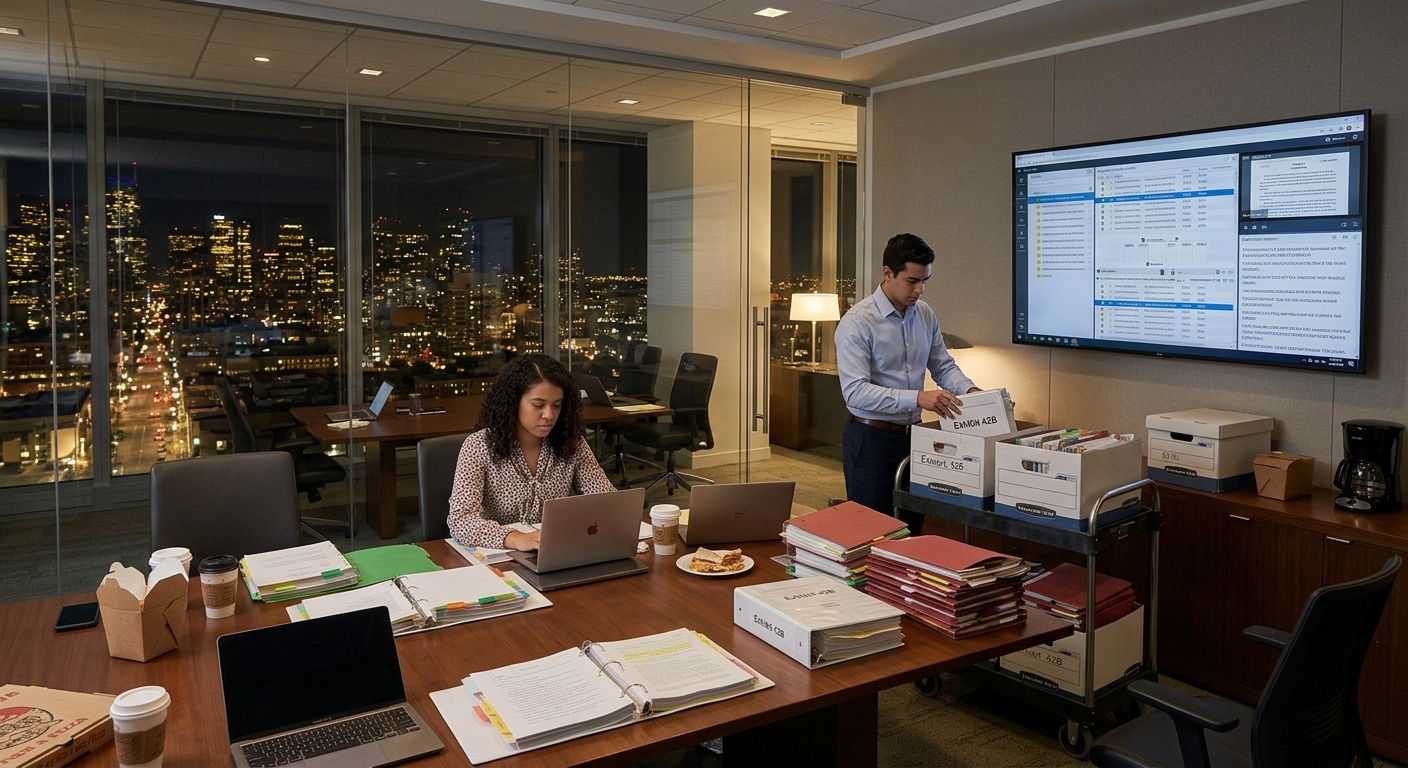
Coordinated preparation between paralegals, associates, and presentation specialists keeps exhibits, transcripts, and visuals ready well before the first witness takes the stand.
Peder Rudling Legal Services — Trial & Arbitration Readiness Checklist
Peace of Mind Through Quality Service • Supporting Trials & Arbitrations Nationwide • pederrudling.com
Operational Readiness Checklist (Interactive & Print-Ready)
Check off items directly on screen as your team progresses, or click Print Readiness Checklist above for a clean, single-sheet war room handout.
1. Exhibit Binders & Electronic Documents |
2. Deposition Videos & Designations |
3. Demonstrative Graphics & Outlines |
4. Venue, Equipment & Team Logistics |
Navigate Preparation by Operational Phase
Concise, experience-based workflow notes designed to prevent bottlenecks and keep costs predictable. Click any topic to expand.
- Focus on Trial & Hearing Exhibits First: Even if your firm has already digitized the broader discovery universe, converting and renaming thousands of unorganized PDFs internally is slow and costly.
- Leverage Document Vendors for Master Binders: Have your litigation support vendor scan your assembled Master Set of tabbed exhibit binders—returning duplicate branded blowback binders alongside cleanly named digital files and load files ready for immediate presentation import.
- Audit Sync Files Early: Missing or corrupt transcript sync files from older depositions are one of the most common last-minute bottlenecks. Request missing sync files from the court reporting agency as soon as witness lists take shape.
- Batch Clip Creation: Sharing designation spreadsheets early allows clips to be built, trimmed, and audio-checked systematically rather than rushing hundreds of edits the night before testimony.
- Respect Court & Venue Staff Time: Schedule a brief visit to verify outlet locations, sightlines for the judge, jury, or arbitration panel, and where the court reporter prefers monitors or projectors placed.
- Coordinate Equipment Cost-Sharing: Because shared displays and switchers benefit both sides, opposing counsel frequently agrees to split hearing room AV rental costs when approached neutrally ahead of setup.
- Next-Day Examination Notebooks: At the close of each hearing day, organizing the next morning's exhibits, pre-treated callouts, and impeachment clips into witness-specific notebooks keeps examination smooth and predictable.
- Overnight Graphic Refinements: Rebuttal slides, updated timelines, and closing demonstratives can be refined after hours so counsel walks into court or arbitration each morning fully prepared.
Frequently Asked Questions
Straightforward answers to common questions from trial and arbitration teams.
Whenever possible, reaching out 3 to 6 weeks prior to hearing allows ample time for conflict checks, venue scouting, exhibit verification, and demonstrative design. That said, we routinely step into fast-moving matters on short notice following an unsuccessful mediation or late summary judgment ruling—integrating into your workflow on day one.
Yes. We regularly manage electronic exhibit presentation, synced video playback, and real-time document callouts across Zoom, Microsoft Teams, and hybrid hearing room setups for single-arbitrator and three-arbitrator panels nationwide.
We operate as a seamless extension of your existing team—respecting established firm hierarchies, adapting to your preferred file-naming and exhibit numbering conventions, and coordinating directly with your paralegals and outside vendors so nothing falls through the cracks.
Yes. While based in Southern California, Peder travels nationwide for federal and state trials as well as domestic and international arbitrations, and provides remote graphic design and database preparation from anywhere.